
From Prison to Netflix: How Lewis Raymond Taylor Rebuilt His Life as The Psychopath Life Coach
Lewis Raymond Taylor defies the conventional redemption narrative. Once written off by society after a history of violence and multiple prison sentences, the man now known to millions as Netflix’s The Psychopath Life Coach has transformed his clinical diagnosis of Antisocial Personality Disorder into a strategic engine for business success. In this captivating sit-down on Beyond With Aleksandra King, she probes the unsettling reality of living without empathy or fear. From his sincere approach to his criminal past to the complexities of navigating fatherhood with ASPD, this interview explores the radical self-reconstruction required to turn a life of chaos into a multimillion-dollar coaching empire.
The Background of The Psychopath Life Coach
Lewis has spoken publicly about growing up amid abuse, neglect, substance addiction, and criminal behaviour, which culminated in multiple prison sentences during his teens and twenties. He has stated that he was clinically diagnosed with antisocial personality disorder, alongside other mental health conditions, and that for much of his early life he was viewed (by himself and others) as dangerous and beyond rehabilitation.
Rather than presenting a conventional redemption narrative, Taylor has framed his background as evidence of what he calls radical self-reconstruction: a deliberate decision to abandon crime and redirect his traits into business and leadership. This framing has become central to both his public persona and commercial success.
Following his release from prison, Taylor entered the self-development and coaching industry. He founded The Coaching Masters, a business education and mentoring organisation that teaches sales, mindset, and high-ticket coaching models.
Taylor’s public profile increased significantly with the release of the Netflix documentary The Psychopath Life Coach, which explored his criminal past, psychological diagnosis, and rise as a business leader. The documentary generated substantial media attention in the UK, reaching Netflix’s top-ten charts and prompting renewed debate around rehabilitation, ethics in coaching, and the commodification of personal trauma.
Lewis Raymond Taylor remains active as a business owner, podcast host, and public speaker. He continues to defend his company against criticism, rejecting claims of cult-like behaviour and asserting that his work empowers individuals to take responsibility for their lives and finances. Today, Taylor occupies a polarising position in British popular culture: admired by supporters as evidence of radical personal transformation, and criticised by detractors as emblematic of the darker edges of the self-help industry.
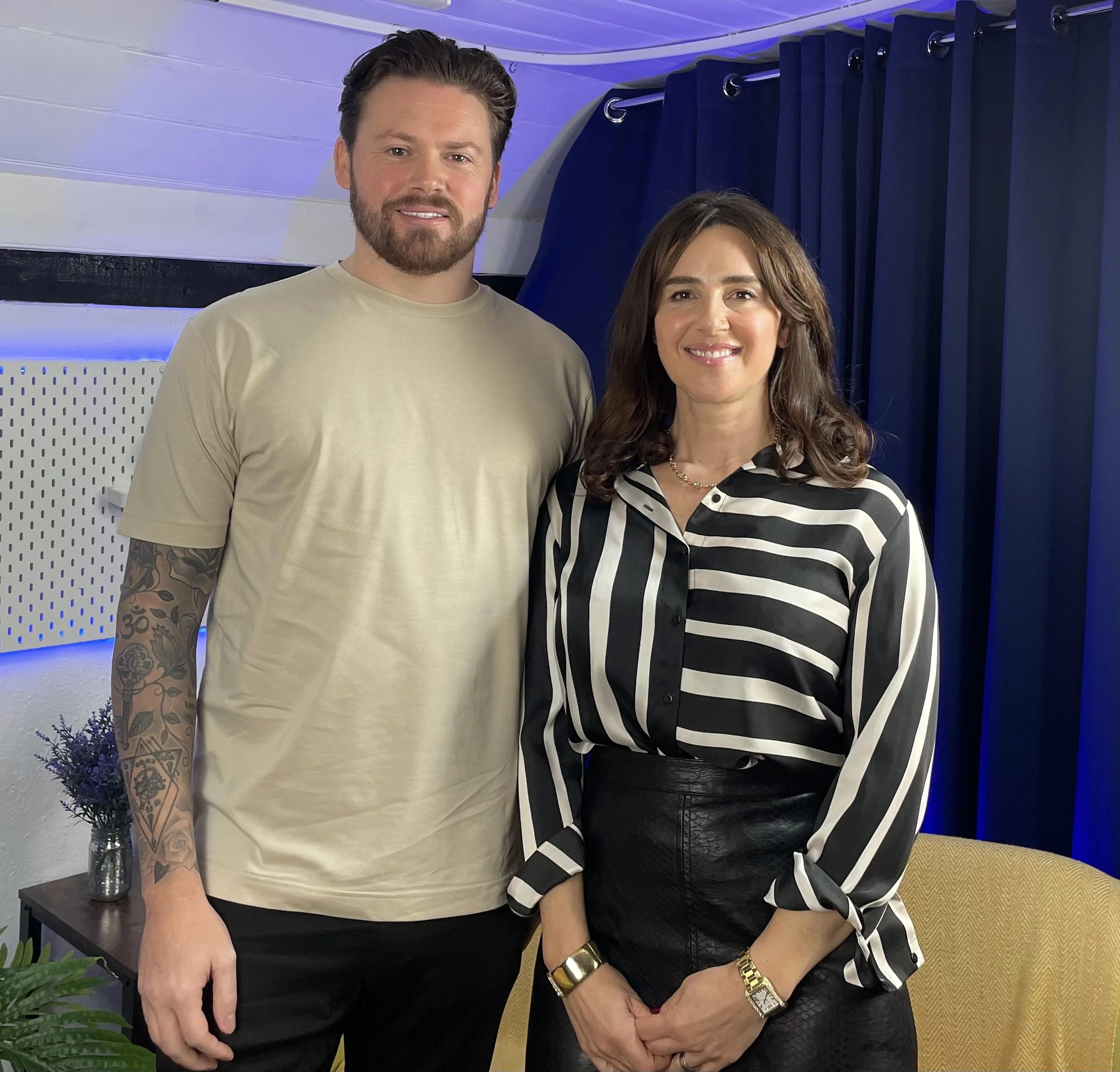
On Beyond With Aleksandra King…
The meeting between Aleksandra and Lewis unfolds as an intense and at times shocking conversation that blurs the boundaries between interview, confession, and psychological exploration. From the very opening line with Aleksandra admitting to never having interviewed a psychopath before , the tone is set for an encounter that is both deeply human and open.
What follows is an extraordinary dialogue that ventures into topics of violence, neurodivergence, addiction, emotional flatness, transformation, and the difficult question of whether anyone can truly outrun their past.
A Past Marked by Violence and Brutal Honesty
Alexandra wastes little time probing Lewis’s criminal history. When she asks how many times he has been in prison, Lewis replies plainly: “Three times.” Moments later, he delivers one of the interview’s most shocking admissions:
“I’ve actually put two people in a coma… and I realised in that moment that I was the problem.”
For him, at that time a young man with an underdeveloped sense of fear or empathy, the violence was part of an internal reward system. He explains later, “There’s an element of chaos that I’m attracted to… it was a searching to feel.”
His attraction to adrenaline, confrontation, and danger became a defining force in his early years.
The Netflix Documentary: A Controversial Platform
A major dramatic arc in the conversation revolves around Lewis’s rise to fame through the Netflix documentary The Psychopath Life Coach. Alexandra remarks on the oddity of someone who openly identifies as a psychopath achieving celebrity status:
“Admitting I'm a psychopath and they're making money off it—that is wild.”
Lewis, however, dismisses the emotional component and focuses instead on strategy:
“I'm logic first, not emotion first… I understand marketing and sensationalism. People aren’t gonna watch it if it wasn’t called that.”
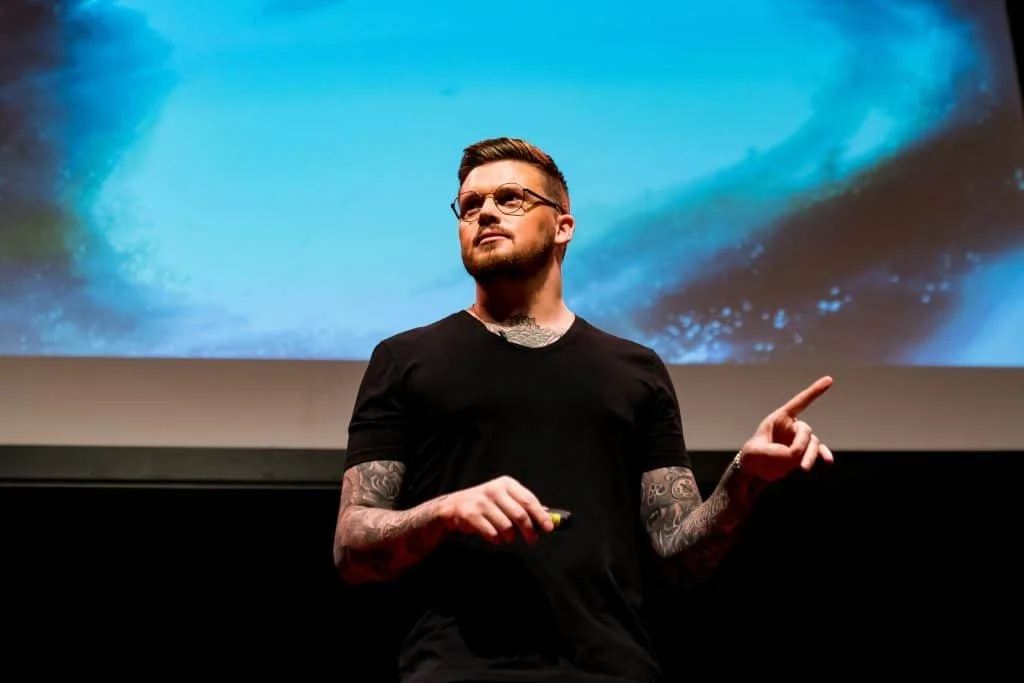
Public perception, he says, is often based on superficial clips of him discussing violence, leading people to brand him as “evil” or irredeemable. But he argues that those who actually listen to his full story often understand him—because, as he puts it,
“I'm brutally honest and transparent to the point where people can't get their head around it.”
Lewis repeatedly clarifies the distinction between the media label “psychopath” and his formal, clinical diagnosis: Antisocial Personality Disorder (ASPD).
He describes it as
“just neurodivergence… no different than ADHD or dyslexia… I’ve got a diverse different mind.”
Lewis insists that psychopathy itself is a spectrum and that most people misunderstand it entirely. He does not deny his emotional limitations- on the contrary, he names them bluntly, saying:
“I don’t feel empathy. I don’t feel fear. I don’t really feel any emotion… it’s very baseline.”
This lack of emotional depth becomes a recurring point of tension, especially when the conversation turns to his personal relationships.
A Rare Vulnerability: Fatherhood
Perhaps the most emotional moment of the entire meeting comes when Alexandra asks if Lewis regrets sharing so openly about his condition.
He actually admits to being completely comfortable with the world knowing, except for one thing:
Since the documentary, he has had a son.
Lewis confesses the thought that now haunts him:
“Imagine being asked, ‘Do you love your son?’ The answer is yes, I do… but I don’t necessarily feel it.”
He continues:
“I have a very flat range. It’s a knowing rather than a feeling.”
For the first time, he admits to genuine discomfort for how his son might one day interpret his words.
“I wanna make sure he understands it correctly… that he doesn't perceive it in the wrong way.”
It’s one of the rare glimpses into Lewis’s internal conflict, this being the divergence between cognitive empathy and emotional capacity.

The Turning Point: A Mirror in a Prison Cell
Lewis admits he did not hit rock bottom after injuring someone or being sentenced. The real turning point came in a cramped prison cell, staring into a scratched metal mirror: he saw himself in his mirror and realised he was the problem in all this.
A friend's brutal comment on social media, which said “nothing changes”, triggered a moment of rare introspection. For the first time, Lewis recognized a pattern: his life was looping, repeating the same cycle of violence, arrest, and imprisonment. That insight opened a floodgate. From then on he sought support, undergoing the maths and English programmes, rehabilitation courses and more which surrounded him that whole time.
One of the most powerful arcs of the interview is how Lewis, once convinced he was “stupid,” discovered a talent for learning thanks to a prison tutor named Susie. In a dramatic display of cognitive ability, Lewis later memorised 500 decimal places of pi simply because a tutor mentioned the concept in passing. This unlocked a new narrative for him- one where he could reinvent himself intellectually instead of socially or violently.
The Limits of Change and the Value of Control
Lewis does not romanticize his transformation. He states plainly:
“It’s uncurable… you can only learn to manage it. There’s no therapy, no tablet.” but he asserts that “You can use it to your advantage, and I’m proof of that.”
He has redirected his need for challenge into entrepreneurship and coaching, pursuing goals not out of joy, but because progress, extreme progress, is the closest thing he has to emotional stimulation.
By the end, Alexandra reflects on the enormity of Lewis’s transformation. Despite being written off by society, he single-handedly dragged himself out of his position and that feat is to be admired and respected.
Lewis’s story remains profoundly complex. It is a story of a man without conventional emotional tools building a life of structure, discipline, and contribution. The conversation is dramatic not just because of Lewis’s past, but because of how thoughtfully, and fearlessly, he examines it. If there is only one episode of Beyond with Aleksandra King you watch, this is definitely a good choice…